
Home storage products range from battery modules to integrated systems with inverters and energy management. OEMs, distributors and solar integrators need to know what each manufacturer supplies before comparing names.
This guide covers ten companies with documented residential battery products. SAFTEC publishes it and places itself first as an editorial choice for custom LiFePO4 battery programs. See our home storage battery capabilities for B2B projects.
How We Selected These Manufacturers
Each company has publicly described a finished home battery or residential battery system. Cell-only suppliers and distributors were excluded. We distinguish battery modules, battery-and-inverter ranges and integrated systems because their scopes differ.
The profiles draw on manufacturers’ published product information, not our hands-on testing. Positions reflect editorial relevance to this topic; a place on the list does not imply that a company offers OEM manufacturing.
Top 10 Home Energy Storage Battery Manufacturers
SAFTEC — Custom Batteries for B2B Programs
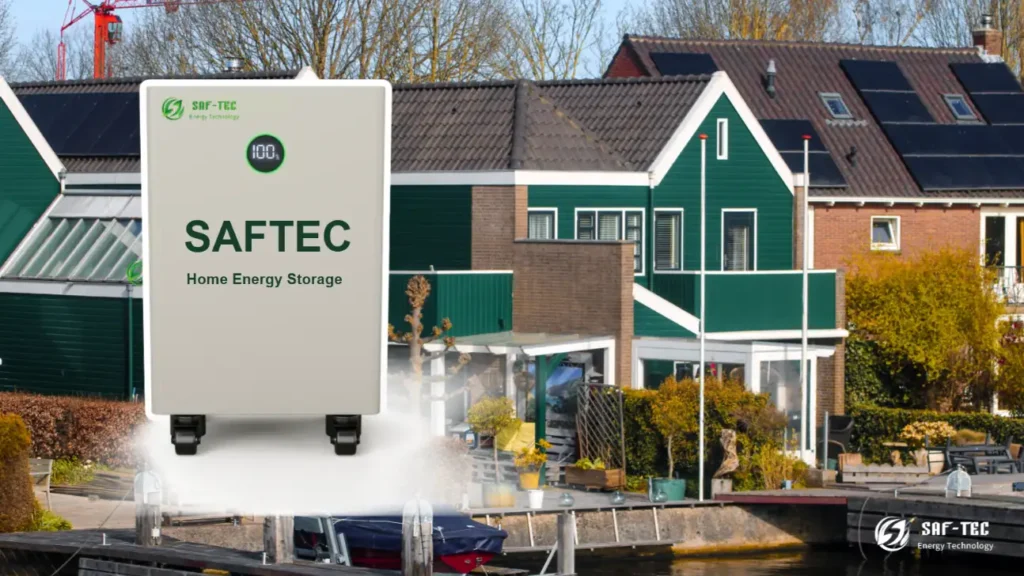
SAFTEC manufactures LiFePO4 packs for OEMs, distributors and project buyers. Wall-mounted and stackable formats are starting points for discussions about capacity, enclosure and BMS interface. SAFTEC does not stock home batteries for retail sale. An email or meeting establishes the requirements; an agreed design and order precede batch production.
BYD — Battery-Box Premium
BYD offers low-voltage LVS and high-voltage HVS/HVM residential batteries. LVS is designed to work with an external inverter, so the battery is one part of the home system. Buyers should check the specific inverter pairing and regional product version.
Tesla — Powerwall
Tesla manufactures Powerwall; Powerwall 3 integrates a solar inverter with the home battery. It represents an integrated approach to solar storage and backup. A finished Powerwall has a different supply model from a battery pack made to an OEM drawing.
Pylontech — Modular Home Batteries
Pylontech’s US5000 is a 48V-class LFP module for home storage. It illustrates a battery-led architecture that can be expanded with compatible equipment. Confirm the intended inverter combination and expansion limits for the project rather than relying on voltage alone.
Fox ESS — Batteries and Inverters
Fox ESS offers EQ batteries within a wider solar and storage range. Its products illustrate a battery designed around an inverter ecosystem. Buyers should establish which equipment and settings are included in the proposed system, especially for backup operation.
Deye — Home Battery Systems
Deye lists residential batteries such as the low-voltage RW-F10.2 alongside hybrid inverters. The battery has its own product documentation, but system performance depends on the chosen inverter and configuration. Specify the exact pairing when planning repeat installations.
Dyness — Residential LFP Batteries
Dyness offers low-voltage residential products including PowerBox G3. This is a defined battery product for home energy storage, leaving system design to the equipment combination. Check physical format, expansion and inverter integration for the intended market.
LG Energy Solution — Home Battery Portfolio
LG Energy Solution offers residential batteries in its RESU and enblock ranges. Its product lines show how a large battery manufacturer serves home storage. Product versions vary by region, so buyers should use documentation for the exact model being sourced.
GSL Energy — Batteries and OEM Supply
GSL Energy presents wall-mounted, rack-mounted and stackable home batteries and describes OEM/ODM services. That makes it relevant to distributors planning a branded range. Confirm the offered configuration, customization scope and production arrangements for a specific program.
BSLBATT — OEM Residential Batteries
BSLBATT publishes wall-mounted, rack and stackable residential battery ranges, with OEM customization described for selected products. It is another B2B supplier to evaluate when building a home battery range. Confirm which customization options apply to the product under discussion.
What B2B Buyers Need to Confirm Before Production
First define the supply boundary. Are you sourcing a battery to pair with an existing inverter, or a complete system requiring power electronics, switching and software? These are different projects even when both are called home energy storage.
Next, agree on voltage range, usable energy, enclosure and BMS communication. Compatibility should name exact inverter models and settings, not just an inverter brand. The destination market determines which documents must be prepared for the final configuration. These details are resolved through technical discussions; an initial inquiry need not contain a completed drawing. Our home battery selection guide covers capacity planning.
Discuss a Custom Home Battery Project With SAFTEC
SAFTEC builds LiFePO4 home batteries for agreed B2B programs. We do not sell single replacement units or repair installed systems.
Contact SAFTEC with your company, target market, preferred battery format and approximate project volume. An inverter family or preliminary drawing helps if available. We can then discuss requirements, review feasibility and establish what needs approval before production.
Frequently Asked Questions
Can our company request private-label batteries and packaging?
Branding, labels and packaging can be discussed as part of a custom project. Provide your requirements so the proposed design and documents can be reviewed together.
How are changes handled after a battery design is approved?
The proposed change should be checked against the approved specification. The buyer and manufacturer can then decide whether updated documents, tests or a new sample approval are required.
Who handles installation and service in the destination market?
Agree those responsibilities with the installer, integrator and battery supplier before the project proceeds. SAFTEC supplies B2B batteries; local installation and service arrangements depend on the contract and market.
Why is there no fixed lead time for a custom battery?
Timing depends on design approval, materials, validation and order quantity. A production schedule can be confirmed after the project’s scope and requirements are agreed.