Golf Cart Lithium Batteries – LiFePO4 Packs for Carts & Fleets

Upgrade your golf carts from heavy, maintenance-intensive lead-acid batteries to lightweight LiFePO4 packs. SAFTEC designs and builds 36 V and 48 V lithium golf cart batteries that drop into most popular cart models, extend runtime and reduce total cost for fleets.

  • 36 V / 48 V LiFePO4 packs for Club Car, EZ-GO, Yamaha and more

  • Drop-in kits with brackets, harness and lithium charger options

  • Lighter weight for better acceleration and less turf compaction

  • OEM / ODM service for fleet operators and cart manufacturers

Why Choose SAFTEC as Your Golf Cart Battery Manufacturer

SAFTEC focuses on lithium batteries for motive and storage applications. For golf carts we combine rugged LiFePO4 cells, proven BMS platforms and application-specific engineering so your fleet runs reliably season after season.

For Fleet Owners & End Users

  • Longer runtime and more stable speed after each charge

  • No acid leakage reduces maintenance time

  • Lighter carts minimize damage to fairways and greens

  • Optional Bluetooth/CAN bus battery status monitoring

For Dealers & Distributors

  • Ready-to-install packs and wiring harness options

  • Training support for installation and troubleshooting

  • White-label packaging, manuals and labels in your language

  • Factory stock plus customised batches for key customers

For OEM Projects

  • Pack design matched to your chassis and controller

  • Communication options (CAN, RS485) for integration

  • Engineering samples, validation support and reliability testing

  • Long-term supply with documented quality control

Saftec Golf Cart Lithium Battery Models & Specs

Choose from our standard golf cart lithium battery range below. All packs are built with LiFePO4 cells, an integrated BMS and rugged enclosures designed for daily cart use.

Model Nominal Voltage (V) Capacity (Ah) Max Continuous Discharge (A) Peak (10s) (A) Dimensions (mm) Dimensions (in) Weight (kg / lb)
24V160-CAN 25.6 160 100 250 524×360×265 20.6×14.2×10.4 43 / 94.8
36V100-CAN 38.4 100 100 200 385×338×255 15.1×13.3×10.0 34 / 75.0
48V32-GC2 51.2 32 32 100 260×180×276 10.2×7.0×10.8 15.6 / 34.4
48V56-SM 51.2 56 56 150 460×334×232 18.1×13.1×9.1 35 / 77.2
48V100-CAN 51.2 100 100 250 460×334×255 18.1×13.1×10.0 43 / 94.8
72V100-CAN 73.6 100 100 150 740×320×255 29.1×12.6×10.0 72 / 158.7

“For other voltages, capacities or communication options, please contact us. We also design custom packs for OEM carts and utility vehicles.”

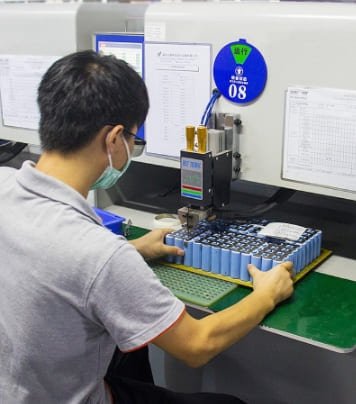
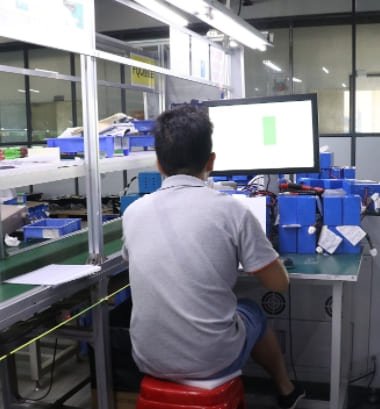
Production team assembling lithium golf cart and motive power packs with LiFePO4 cells - saftecenergy

Not Sure Which Golf Cart Pack Fits? Send Us Your Cart Details

Every course and fleet runs a little differently. Instead of guessing amp-hours, send us basic information about your carts and route. Our engineers will size a LiFePO4 pack and charger combination for you.

  • Cart brand and model (Club Car, EZ-GO, Yamaha, etc.)

  • System voltage (36 V or 48 V) and controller rating, if known

  • Typical route length / number of holes per round

  • Average payload and any special use (hilly course, lifted carts, accessories)

Drop-in Kits for Popular Golf Cart Models

For many fleets it is easiest to replace the lead-acid battery set with a single drop-in lithium pack. SAFTEC offers 36 V and 48 V drop-in kits for common cart platforms with brackets, harnesses and charger options.

  • Single-pack design simplifies wiring and maintenance

  • Adapter trays and brackets to suit typical battery compartments

  • Optional lithium-compatible chargers with correct voltage profile

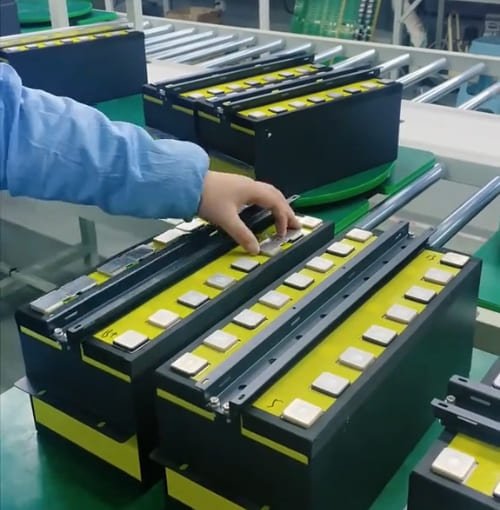
Final inspection area for LiFePO4-based lithium battery systems for off-grid energy storage - saftecenergy

Service from Sizing to Shipping - Saftec

We know that many fleets are upgrading from lead-acid batteries for the first time. Our team supports you through every step of the project.

Pre-Sales Support

  • Battery sizing based on route length, terrain and load

  • Checking controller and charger compatibility

  • Layout suggestions for battery box and cable routing

After-Sales Support

  • Installation guidance and troubleshooting documents

  • Remote support during initial roll-out

  • Training materials for dealers and maintenance teams

Documentation & Logistics

  • UN38.3 test summary, MSDS and packing reports

  • Export-ready packaging and palletisation

  • Coordination with your forwarder or door-to-door service

How Is a Golf Cart Lithium Battery Different from Lead-Acid?

Traditional golf cart battery banks are built from several independent lead-acid batteries wired in series. Each ages at a different rate and there is no electronic control inside the pack. Voltage drops quickly as the cart is used, so performance falls off toward the end of each round.

A LiFePO4 golf cart pack from SAFTEC is built as one integrated module with a Battery Management System (BMS). The BMS monitors each cell group, keeps them balanced and enforces limits for voltage, current and temperature.

  • Voltage curve: a 48 V lead-acid bank may fall from about 50 V down to 42 V during normal use. A 51.2 V LiFePO4 pack stays much flatter, for example around 53–49 V over most of the discharge.

  • Usable capacity: fleets often use only 40–50% of a lead-acid bank to protect lifetime. A LiFePO4 pack is typically sized to use 70–80% of its rated amp-hours each cycle without excessive wear.

  • Control and protection: with lead-acid the controller “sees” only pack voltage. With lithium, the BMS provides extra protection and data, which can be shared via CAN or other interfaces if needed.

If you’d like us to check whether your existing cart is a good candidate for lithium, send us your cart model and photos of the battery compartment and we’ll review it for you.↓↓↓

saftecenergy@gmail.com

How Big Should Your Golf Cart Lithium Battery Be?

The size of a golf cart lithium battery is defined mainly by system voltage (V) and capacity in amp-hours (Ah). Together they determine the energy content:

Usable energy (Wh) ≈ System voltage (V) × Capacity (Ah) × Usable DOD

For typical golf carts, real-world energy consumption often falls in the range of 50–80 Wh per kilometre (80–130 Wh per mile), depending on terrain, speed and payload.

A simple example:

  • A 48 V 105 Ah LiFePO4 pack has about 5,040 Wh of nominal energy (48 × 105).

  • If we plan to use 70% of that each cycle, usable energy is around 3.5 kWh.

  • At an average 60 Wh/km, this corresponds to roughly 55–60 km of practical range under moderate conditions.

In practice, we size the pack with some margin for hills, headwinds and battery ageing. That is why two fleets with the same cart model can end up with different Ah ratings: a flat resort with short trips and a hilly 36-hole course do not have the same needs.

Share your course layout and typical daily usage with us, and we will propose a pack size with clear runtime and charging expectations.↓↓↓

saftecenergy@gmail.com

Conversion Tips – From Multiple Lead-Acid Batteries to One Lithium Pack

Most conversions replace a group of 6–8 lead-acid batteries with a single LiFePO4 pack of the same system voltage. Mechanically this often frees up space and reduces weight, but the electrical side must be checked carefully.

  1. Controller and current limits

    • Confirm the motor controller’s maximum continuous and peak current (for example 200–300 A continuous, 350–500 A peak).

    • Select a lithium pack whose continuous and peak ratings are safely above these values so the BMS does not trip during hard acceleration or hill-climbs.

  2. Cables, fuse and main contactor

    • Check the cross-section of existing main cables and their length. Many carts use conductors in the 25–50 mm² range for high-current paths.

    • Verify the main fuse rating and contactor are suitable for the lithium pack’s maximum current and that all terminations are clean and tight.

  3. Charger and charge profile

    • Measure or confirm charger output voltage (for example about 58.4 V for a 51.2 V LiFePO4 pack).

    • Make sure the charge current is within the recommended range (often 0.2C–0.3C) and that there is no long “equalise” phase designed for lead-acid.

We can review your controller specs, charger label and wiring photos to confirm whether a simple drop-in conversion is possible or if minor upgrades are recommended.↓↓↓

saftecenergy@gmail.com

Temperature and Climate Considerations for Lithium Golf Cart Packs

Golf carts operate in very different climates—from cool coastal mornings to hot summer afternoons in desert regions. LiFePO4 chemistry handles this well, but there are practical limits for charging and discharging.

  • Recommended discharge range: roughly –20°C to +55°C

  • Recommended charge range: roughly 0°C to +45°C

  • Under-seat compartments in hot markets can reach 50–60°C in direct sun

For hot or cold regions we can specify packs with extra thermal margin, adjust charger current and configure BMS limits to protect cycle life. Designing with real site temperatures in mind helps avoid nuisance trips and premature aging.

Tell us about your climate and storage conditions, and we will suggest suitable pack and charger settings for long-term reliability..↓↓↓

saftecenergy@gmail.com

Storage and Seasonal Use Guidelines for Golf Cart Lithium Batteries

Many courses and resorts have high and low seasons. Proper storage helps keep lithium packs ready for the first tee-time after a long break.

  • Store packs at around 40–60% state of charge, not fully charged or fully empty

  • Switch off the main disconnect or storage switch to minimise self-consumption

  • Keep carts in a dry, ventilated area, ideally between 0°C and 30°C

  • For storage periods longer than 6 months, check pack voltage or SoC once and adjust if needed

Under these conditions, self-discharge is usually below about 3% per month, so most fleets can park carts over winter and restart them in spring with minimal preparation.

If your carts sit unused for long periods, we can include storage labels and procedures with each pack to guide your team.↓↓↓

saftecenergy@gmail.com

Engineering Support – Matching Packs, Controllers & Telemetry

Choosing a lithium pack is not only about voltage and amp-hours. At SAFTEC we also match pack current ratings to your motor controller and, where required, provide data interfaces for fleet monitoring.

  • Confirm controller continuous and peak current, then select suitable pack ratings

  • Review cable sizing, fuses and contactors for high-demand carts (lifted, heavy loads, hilly routes)

  • Optional CAN or RS485 communication for state of charge, alarms and event logs

  • Simple displays or Bluetooth apps for smaller fleets without full telematics

For OEMs and larger fleets, we can work directly with your engineering team to define current limits, communication protocols and diagnostic functions.↓↓↓

saftecenergy@gmail.com

Quick Answers to Common Golf Cart Lithium Battery Questions

Q1. What discharge current can a SAFTEC golf cart lithium pack safely deliver?
Our golf cart LiFePO4 packs are normally rated for 0.5C–1C continuous discharge and higher short-term peaks. For example, a 48V 105Ah pack is typically designed for around 100 A continuous and 200 A peak for 10 seconds, which is enough for steep hills and acceleration. We match the current rating to your motor controller so the pack is neither undersized nor over-stressed.

Q2. How does depth of discharge (DOD) affect cycle life for golf cart use?
As a general rule, shallower cycles give longer life. At around 80% DOD, a LiFePO4 golf cart pack can often achieve 3,000–4,000 cycles. If the pack is usually cycled to only 50% DOD, lifetime can extend toward 5,000–6,000 cycles. Repeatedly running the pack to 100% DOD and storing it fully charged in high temperatures will reduce lifespan.

Q3. Can I connect golf cart lithium packs in parallel to extend range?
Yes, but parallel use must be designed and approved in advance. SAFTEC can supply packs that are intended for parallel operation, with matched firmware, cable lengths and protection settings. Mixing different capacities, ages or brands in parallel is not recommended and may lead to unbalanced currents and BMS trips.

Q4. What charging current do you recommend for golf cart lithium batteries?
For most applications we recommend a charge current of around 0.2C–0.3C. For example, a 48V 105Ah pack would typically use a 20–30 A charger, giving a 3–5 hour charge time. Higher currents up to the pack’s maximum rating are possible if faster turnaround is needed, but this should be carefully matched to your charger and thermal conditions.

Q5. What temperature range can the packs operate in, and are there limits for charging?
Typical LiFePO4 golf cart packs can discharge from around –20°C to +55°C, while the recommended charging range is 0°C to +45°C. Below freezing, charging current must be reduced or disabled to protect the cells. Our BMS monitors temperature and can automatically limit or stop charging if conditions are outside safe limits.

Q6. How fast do lithium golf cart batteries self-discharge during storage?

LiFePO4 chemistry has very low self-discharge, typically less than 3% per month at room temperature. For seasonal storage we suggest charging the pack to about 40–60% state of charge, turning off the main disconnect and storing the cart in a dry, ventilated area. Under these conditions, the pack can usually sit for several months with minimal capacity loss.

Q7. What happens if the BMS shuts down the pack, and how is it reset?

If the BMS detects a serious fault such as over-current, over-temperature or over-discharge, it will open the internal switches to protect the cells. In many cases, removing the load and applying a correct charger will allow the BMS to recover. For repeated trips, the event data can be read (on CAN/Bluetooth-enabled packs) so we can identify whether the system was overloaded or mis-configured.

Q8. Which standards and tests can SAFTEC golf cart packs comply with?

Depending on the project and volume, packs can be designed and tested in line with UN38.3 transport requirements, and relevant IEC standards for motive power and energy storage. We can also provide MSDS, test summaries, packing reports and type-test data to support your certification and logistics process.

saftecenergy@gmail.com

Ready to Talk About Your Golf Cart Lithium Battery Project? Contact SAFTEC

Whether you’re upgrading a small group of carts or planning a full fleet conversion, SAFTEC can help you choose the right LiFePO4 pack, charger and accessories. Share your cart models, system voltage and typical usage, and our engineers will come back with a clear proposal.

  • OEM / ODM lithium packs for cart manufacturers

  • Fleet upgrades for golf courses, resorts and industrial sites

  • Technical review of controller, charger and wiring before conversion